







Dissolved oxygen calibration is the process of adjusting a DO meter to ensure its readings accurately reflect the true oxygen concentration in water or other liquids. DO meters can drift over time due to sensor aging, membrane degradation, or environmental factors. Calibration compensates for these changes, maintaining the meter’s precision and reliability.
However, even the most advanced sensors require regular dissolved oxygen calibration.
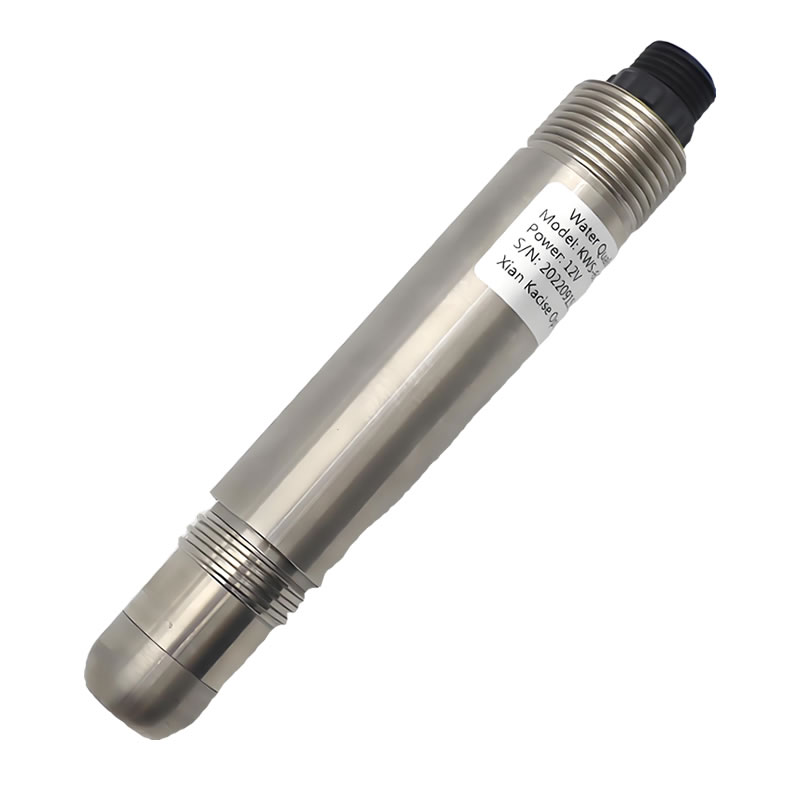
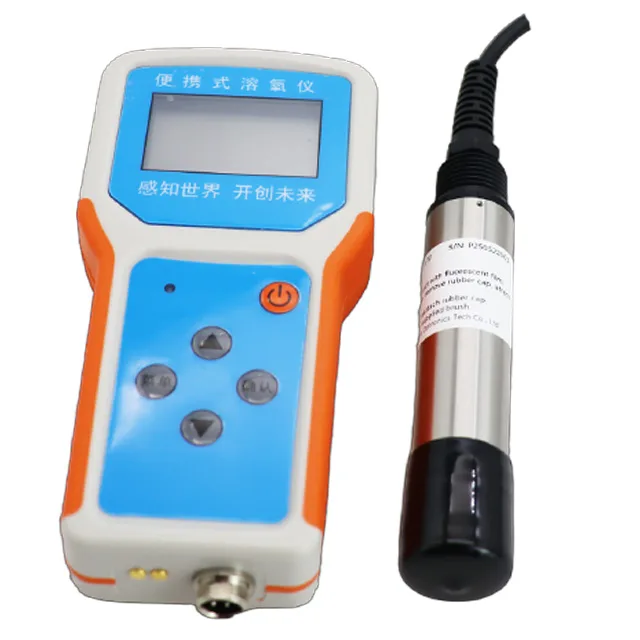
This guide takes the KWS-600,KWS-630,and KWS-670 fluorescence-type dissolved oxygen sensors as examples to systematically explain the dissolved oxygen calibration procedure, the preparation of standard solutions, and important operational precautions.For more information visit here.

Why Calibrate Your Dissolved Oxygen Meter?
- Accurate Environmental Monitoring: Aquatic organisms depend on specific oxygen levels; inaccurate readings can mask pollution or hypoxia events.
- Optimized Aquaculture: Fish and shrimp farming require precise DO control to maintain healthy stock.
- Efficient Wastewater Treatment: DO levels influence microbial activity and treatment efficiency.
- Regulatory Compliance: Many environmental standards mandate regular calibration to validate data integrity.
Regular calibration—before initial use, after prolonged storage, and periodically during operation—is essential to avoid measurement errors that could compromise research, operations, or compliance.
Understanding Dissolved Oxygen Measurement
Dissolved oxygen refers to the amount of oxygen gas dissolved in a liquid, typically measured in milligrams per liter (mg/L) or as a percentage of saturation (% sat). DO meters use either polarographic/galvanic probes or optical sensors to detect oxygen levels.
- Polarographic/Galvanic Probes: Electrochemical sensors requiring membranes filled with electrolyte; sensitive to membrane condition.
- Optical Sensors: Use luminescence quenching technology; generally more stable and require less maintenance.
Both sensor types require calibration to ensure readings reflect the actual DO concentration accurately.
Types of Dissolved Oxygen Calibration
KWS series sensors support two primary dissolved oxygen calibration methods:
| Calibration Type | Characteristics | Adjusted Parameters |
| Single-Point Calibration (1-Point) | Usually uses the 100% saturation point as the reference. Simple to perform, suitable for routine maintenance. | Adjusts K value |
| Two-Point Calibration (2-Point) | Uses both the zero point and saturation point for calibration, providing higher accuracy. Suitable for recalibration or new probes. | Adjusts K value and B value |
K represents the slope, while B represents the zero offset.
Different dissolved oxygen calibration types can be selected according to application requirements.
Preparation of Standard Solutions for Dissolved Oxygen Calibration
1. Zero-Point Standard Solution
Zero calibration determines the probe output under an oxygen-free condition.
Preparation steps:
- Add 95–200 mL of distilled or deionized water into a beaker.
- Add approximately 5 g of anhydrous sodium sulfite (Na₂SO₃).
- Stir with a glass rod until completely dissolved to obtain a ~5% sodium sulfite solution.
- If undissolved crystals remain, the solution is saturated and ready for use.
- This solution absorbs dissolved oxygen quickly, reaching nearly 0 mg/L, and is used for zero-point dissolved oxygen calibration.
2. 100% Oxygen-Saturated Environment
Used for slope (full-scale) calibration.
Method 1: Air-Saturated Water (Recommended)
- Fill about two-thirds of a thermostatic water bath with fresh distilled water.
- Aerate continuously using a small air pump for at least one hour.
- Let it stand for about 20 minutes to obtain air-saturated water.
Method 2: Humid Air Method (Simplified On-site Version)
- Clean the sensor’s optical membrane.、
Place the probe in a humid environment (e.g., a sealed container with a small amount of water).
Once the reading stabilizes, perform the full-scale dissolved oxygen calibration.
Dissolved Oxygen Calibration Procedure
1. Zero-Point Calibration
- Place the probe into the 5% sodium sulfite solution.
- Ensure the membrane head is fully submerged and free of air bubbles.
- Let it stand for about 3 minutes until the reading stabilizes.
- Execute the “Zero Dissolved Oxygen Calibration” command on the instrument or via the upper computer software.
- Save the settings.
2. Full-Scale (Slope) Calibration
- Place the probe into air-saturated water (or a humid air environment).
- Let it stand for about 3 minutes until the reading stabilizes.
- Execute the “Slope Dissolved Oxygen Calibration” command and save the settings.
3. Two-Point (K & B Value) Manual Calibration (Example: KWS-630)
When manual calculation of calibration parameters is required, proceed as follows:
- Reset defaults: K = 1, B = 0.
- Measure reading Y in 100% oxygen environment (e.g., Y = 0.96).
- Measure reading X in zero solution (e.g., X = 0.015).
- Calculate:Example: K ≈ 1.05, B ≈ -0.016.
- Write the parameters into the sensor via MODBUS command.This completes the two-point dissolved oxygen calibration.
Calculation:
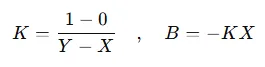
(Example result: K ≈ 1.05, B ≈ –0.016)
After obtaining the calculated parameters,write the values (K and B) into the sensor via MODBUS command.
Materials and Equipment Required for Dissolved Oxygen Calibration
| Name | Description |
| Anhydrous Sodium Sulfite (Na₂SO₃) | Used to prepare the zero-point (oxygen-free) calibration solution |
| Distilled / Deionized Water | Calibration medium and solvent for solution preparation |
| Beaker & Glass Stirring Rod | For preparing and mixing calibration solutions |
| Small Air Pump / Aerator | Used to aerate water and produce air-saturated (100%) solution |
| Gloves, Graduated Cylinder, Balance | Ensure safe laboratory operation and accurate measurement |
| Thermostatic Water Bath (Optional) | Controls the temperature of the air-saturated water during calibration |
These components together form a complete dissolved oxygen calibration setup, ensuring calibration accuracy and repeatability.
Precautions During Dissolved Oxygen Calibration
| Item | Key Points |
| Cleaning & Bubble Prevention | Thoroughly clean the probe’s membrane surface before calibration to prevent air bubble adhesion. |
| Temperature Compensation | Ensure the temperature sensor is functioning properly to avoid conversion errors. |
| Stabilization Time | Allow each calibration point to stand for at least 3 minutes until the reading is fully stable before proceeding. |
| Environmental Conditions | Avoid strong light, magnetic interference, and vibrations that could affect calibration accuracy. |
| Solution Freshness | The zero-oxygen solution and air-saturated water should be prepared fresh each time to prevent oxygen concentration drift. |
| Data Recording | Record calibration time, operator, and parameter values for traceability and quality control. |
Following these practices will significantly improve the reliability and consistency of your dissolved oxygen calibration.
Conclusion
Whether it’s the KWS-600,KWS-630, and KWS-670 series, the precision of fluorescence-type dissolved oxygen sensors ultimately depends on proper dissolved oxygen calibration and maintenance.
By mastering the preparation of standard solutions, understanding the significance of K/B parameters, and following standardized procedures, you can keep your sensor performing at its best—delivering accurate and stable data for water quality monitoring.


