







ออกซิเจน ที่ ละลาย ได้ (DO) เป็น ปริมาณ ออกซิเจน โมเลกุล ที่ ละลาย ใน น้ํา ตาม ปกติ จะ แสดง ออก ด้วย มิลลิกรัม ต่อ ลิตร (mg/L). มัน เป็น ตัว บ่ง ชี้ ที่ สําคัญ ที่ สุด อย่าง หนึ่ง ของ คุณภาพ ของ น้ํา และ เป็น ตัว กําหนด โดย ตรง ว่า ปลา, กุ้ง, และ แบคทีเรีย ที่ เป็น ประโยชน์ จะ อยู่ รอด ได้ ใน สระ, ถัง น้ํา, หรือ ทาง น้ํา. มัคคุเทศก์คนนี้อธิบายว่า ละลายออกซิเจนในน้ํา จาก, สิ่งที่บริโภคมัน, และวิธีการที่อุณหภูมิ, ความกดอากาศ, และความเจือจาง มีผลกระทบต่อปริมาณน้ําออกซิเจน

ออกซิเจน ใน น้ํา ลด ลง จาก ที่ ไหน?
ออกซิเจน เข้า ไป ใน น้ํา ผ่าน ทาง ธรรมชาติ สอง เส้น รวม ทั้ง การ แลก เปลี่ยน น้ํา ด้วย.
1. การ ถ่าย ภาพ ใน บรรยากาศ
When the water surface is in contact with air, oxygen molecules diffuse across the surface and dissolve, at a rate that depends on how far the water is from saturation. The more “unsaturated” the water is, the faster this diffusion happens. Wind, wave action, and a large surface-area-to-volume ratio all speed up the process — this is why shallow, wind-exposed ponds pick up oxygen faster than deep, still ones.
2. การสังเคราะห์แสง
พืช, สาหร่าย, และ แพ ลงก์ ตอน จะ ปล่อย ออกซิเจน ออก มา เป็น ผล จาก การ สังเคราะห์ แสง เมื่อ ไร ก็ ตาม ที่ มี แสง อาทิตย์. เกิด ผล สระ น้ํา, this is typically the single largest source of oxygen, often accounting for more than half of total DO input during the day — but it stops completely at night, which is why oxygen levels swing so much between day and night (more on that in ตอน 2 ของ ชุด บทความ นี้).
3. แลกเปลี่ยนน้ํา
Adding fresh, oxygen-rich water — through rain, tidal exchange, or intentional water replacement in a recirculating system — can raise DO levels. In practice, this contributes far less than diffusion and photosynthesis; in static (non-flow-through) ponds, its effect on oxygen is usually minor.

อะไร ทํา ให้ ออกซิเจน ลด ลง?
ใน ด้าน การ บริโภค กระบวนการ หลาย อย่าง จะ แข่งขัน กับ ออกซิเจน ที่ สังเคราะห์ แสง และ การ กระจาย ของ น้ํา.
การ กอบ กู้ ปลา, กุ้ง, และ สัตว์ เลี้ยง น้ํา ชนิด อื่น ๆ. Oxygen consumption per unit of body weight is higher in smaller individuals and rises with water temperature — meaning warm-weather stocking density is far more sensitive to oxygen shortfalls than the same density in cooler water.
ไมโครไบลและแพลงตอนหายใจ แบคทีเรีย, แพลงตอนสัตว์, และแพลงก์ตอนพืช ล้วนกินออกซิเจนผ่านทางหายใจ และแบคทีเรียยังกินออกซิเจน ความ ต้องการ ที่ จะ ย่อย สลาย นี้ คือ สิ่ง ที่ ความ ต้องการ ออกซิเจน ทาง ชีวเคมี (BOD)5จริง ๆ แล้ว วัด
ความต้องการออกซิเจน Oxygen is also consumed at the pond bottom by benthic organisms and by the decomposition of settled organic matter and reduced inorganic compounds — a demand that grows as bottom sludge accumulates over a production cycle.
สารเคมีต้องการออกซิเจน Reduced substances such as ammonia, nitrite, sulfide, and ferrous iron all consume oxygen as they’re oxidized (e.g., ammonia → nitrite → nitrate). Chemical oxygen demand (CODCr) is the standard measurement of this reducing load, and — alongside BOD5 and total organic carbon (TOC) — is one of the three common ways labs quantify organic pollution. Facilities that need to track this alongside DO can pair a dissolved oxygen sensor with a เซ็นเซอร์ COD สําหรับภาพเต็ม ต้องการออกซิเจน
หนีสู่ชั้นบรรยากาศ When surface water becomes supersaturated, oxygen slowly escapes back into the air; wind speeds this up, but it is generally the smallest term in the oxygen budget.
เกลือสลาย Salts and other dissolved solids physically occupy space between water molecules, which reduces how much oxygen the water can hold — one reason seawater carries less DO than fresh water at the same temperature. This is also why การติดตามการละลาย บ่อย ครั้ง มี การ จับคู่ กับ การ ตรวจ สอบ ดู ดู ด้วย ระบบ บิด เบี้ยว หรือ ระบบ ทาง ทะเล เช่น การแยกเกลือออกจากน้ำทะเล ดื่มน้ํา
อุณหภูมิ และ ความ ดัน ควบคุม ความอิ่มสี ของ ออกซิเจน
The saturation point — the maximum amount of oxygen water can hold at equilibrium with the atmosphere — is governed mainly by temperature, with smaller effects from atmospheric pressure and salinity. This relationship follows Henry’s Law:
[O]2] = KH × pO2
ที่ไหน O2คือความเข้มข้นของออกซิเจนที่ละลาย2 คือความดันบางส่วนของออกซิเจนในบรรยากาศและ KH is Henry’s constant, which falls as temperature rises. In practice, this means:
- น้ํา อุ่น ๆ มี ออกซิเจน น้อย กว่า. As water heats from 10°C to 35°C, the saturation concentration in pure water drops from roughly 11.3 mg/L to under 7 mg/L — which is exactly why summer afternoons are the highest-risk time for oxygen crashes in aquaculture.
- ความ ดัน ใน บรรยากาศ ต่ํา (หรือ ระดับ ความ สูง สูง) ลด ความอิ่มสีเนื่องจากมันลดความดันบางส่วน ของออกซิเจน ขับเคลื่อนลงไปในน้ํา
- ความ ยืดหยุ่น ที่ สูง ขึ้นซึ่งเป็นเหตุผลที่ว่า การอ่านแบบดอแบบเดียวกัน หมายถึงสิ่งที่แตกต่างในบ่อน้ําจืด กับระบบของทะเล
ออกซิเจน ใน น้ํา บริสุทธิ์ เวลา 1 นาฬิกา
| Temp (°C) | do (mg/L) | Temp (°C) | do (mg/L) | Temp (°C) | do (mg/L) | Temp (°C) | do (mg/L) |
|---|---|---|---|---|---|---|---|
| 0 | 14.62 | 8 | 11.87 | 16 | 9.95 | 24 | 8.53 |
| 1 | 14.23 | 9 | 11.59 | 17 | 9.74 | 25 | 8.38 |
| 2 | 13.84 | 10 | 11.33 | 18 | 9.54 | 26 | 8.22 |
| 3 | 13.48 | 11 | 11.08 | 19 | 9.35 | 27 | 8.07 |
| 4 | 13.13 | 12 | 10.83 | 20 | 9.17 | 28 | 7.92 |
| 5 | 12.80 | 13 | 10.60 | 21 | 8.99 | 29 | 7.72 |
| 6 | 12.48 | 14 | 10.37 | 22 | 8.83 | 30 | 7.63 |
| 7 | 12.17 | 15 | 10.15 | 23 | 8.63 |
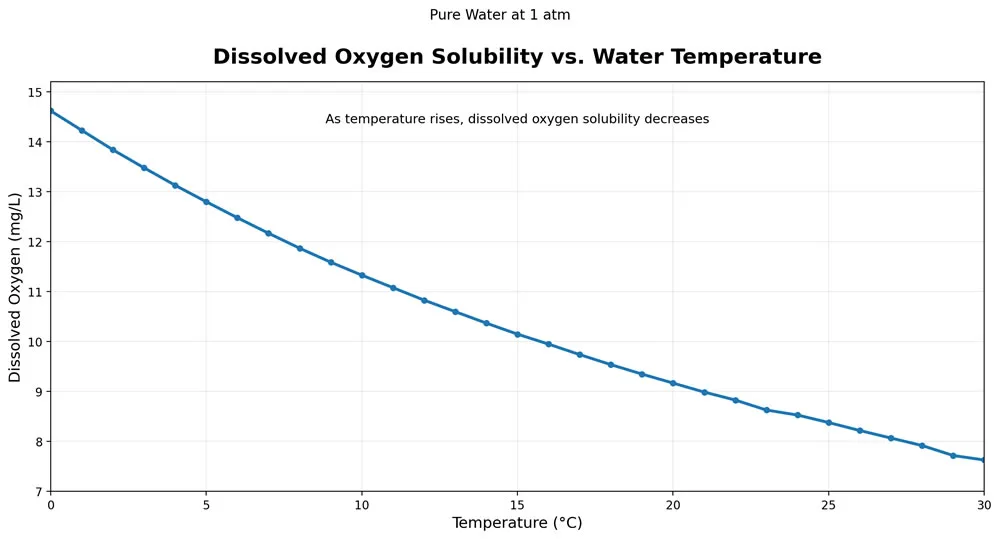
For reference, dissolved oxygen in air-saturated fresh water sits around 8–12 mg/L — less than 1/20 of the oxygen concentration in air itself — while seawater holds noticeably less at the same temperature. For drinking water, a DO level below roughly 6 mg/L is generally considered a sign of poor water quality.
เหตุ ผล ที่ เป็น เรื่อง สําคัญ สําหรับ การ เฝ้า ดู
เพราะ ความอิ่มสีของ DO ขึ้นกับอุณหภูมิอย่างหนัก การอ่านออกซิเจนแบบดิบจะมีความหมาย ร่วมกับการอ่านอุณหภูมิ นี่คือเหตุผลว่าทําไมการผลิตเกรด เซ็นเซอร์วัดออกซิเจนละลาย build in automatic temperature compensation — without it, the same water could show very different DO numbers depending on when it was measured.
Continuous, in-situ monitoring — rather than periodic spot checks — is what lets operators catch a developing oxygen deficit before fish start gasping at the surface. Whether you’re monitoring a น้ำเสีย อ่างบําบัดหรือบ่อเพาะพันธุ์น้ํา หลักการก็เหมือนกัน ใน ตอน 2เราดูที่วิธีการทําที่แตกต่างกันผ่านวัน และผ่านคอลัมน์น้ํา และทําไมระดับออกซิเจนต่ําที่สุด ตอน 3 แล้วเดินผ่าน วิธีการละลายเซ็นเซอร์ออกซิเจนจริงทํางาน ดังนั้นคุณสามารถเลือกได้ถูกต้อง
คำถามที่พบบ่อย
คิว: ออกซิเจน ที่ ละลาย ใน น้ํา มา จาก ที่ ไหน?
เอ: ออกซิเจน เข้า ไป ใน น้ํา ส่วน ใหญ่ แล้ว ผ่าน การ กระจาย ของ บรรยากาศ ไป ทั่ว ผิว น้ํา และ ผ่าน การ สังเคราะห์ แสง โดย พืช น้ํา, สาหร่าย, และ แพ ลงก์ ตอน; ปริมาณ ที่ เล็ก กว่า มา จาก การ แลก น้ํา (การ ไหล, การ ไหล เวียน, หรือ การ เปลี่ยน น้ํา โดย เจตนา).
Q: อะไร เป็น สาเหตุ ของ การ ละลาย ออกซิเจน ใน น้ํา?
เอ: การ ฟื้น ตัว โดย ปลา และ สัตว์ น้ํา ชนิด อื่น ๆ การ หายใจ ของ จุลินทรีย์ และ แพ ลงก์ ตอน (รวม การ ย่อย สลาย ของ สสาร อินทรีย์ ด้วย ซึ่ง วัด ได้ ว่า เป็น กระดูก5สาร เคมี ต่าง ๆ เช่น แอมโมเนีย และ ซัลไฟด์ (มี ผู้ ออก แบบ คือ คาร์บอนไดออกไซด์) หนี ออกซิเจน ไป ยัง บรรยากาศ และ ละลาย เกลือ ทุก ชนิด หรือ ลด ออกซิเจน ที่ มี อยู่.
คิว: อุณหภูมิ มี ผล กระทบ อย่าง ไร ต่อ ออกซิเจน ที่ ละลาย ใน น้ํา?
เอ: Warmer water holds less oxygen. As water heats from 10°C to 35°C, the saturation concentration in pure water falls from roughly 11.3 mg/L to under 7 mg/L, which is why oxygen crashes are most likely on hot summer afternoons.
Q: ระดับ ออกซิเจน ที่ ละลาย ได้ ปกติ ใน น้ํา คือ อะไร?
เอ: Air-saturated fresh water typically holds about 8–12 mg/L, and seawater holds less at the same temperature. For drinking water, a DO level below roughly 6 mg/L is generally considered a sign of poor water quality.
แหล่งอ้างอิง
- การสํารวจธรณีวิทยาของสหรัฐอเมริกา ออกซิเจน ที่ ย่อย สลาย และ น้ําโรงเรียนวิทยาศาสตร์ USGS
- สหรัฐอเมริกา อีพีเอ ออกซิเจนที่ละลายในน้ำ(CADDIS).


