







Background & Challenge
A customer needed to measure the water level in a tank continuously, without putting an instrument into the water. Contact-type devices — floats and immersed probes — foul, corrode, or jam over time, and any of these turns into a maintenance call. The requirement was therefore a non-contact measurement of the water surface, mounted above the tank.
Why the KUM-A
The KUM-A intelligent ultrasonic level sensor measures the water surface acoustically from above the tank: it transmits an ultrasonic pulse and times the echo, so nothing touches the water. Integral temperature compensation corrects the sound velocity for the air temperature, which keeps the indicated level stable throughout the day. The instrument provides an RS485 (Modbus) interface as well as an analogue output, so the level can be read by a control system or a display.
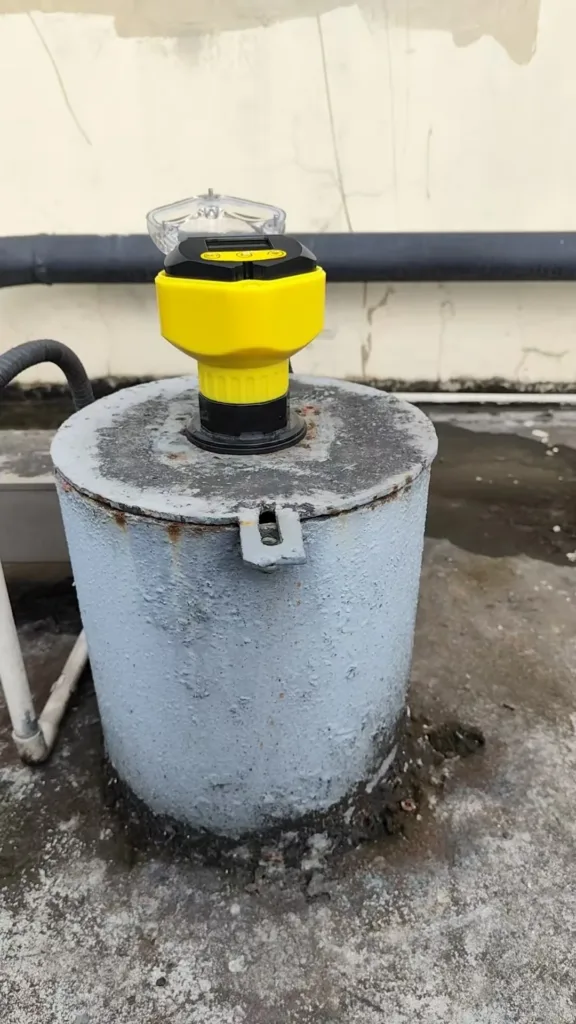
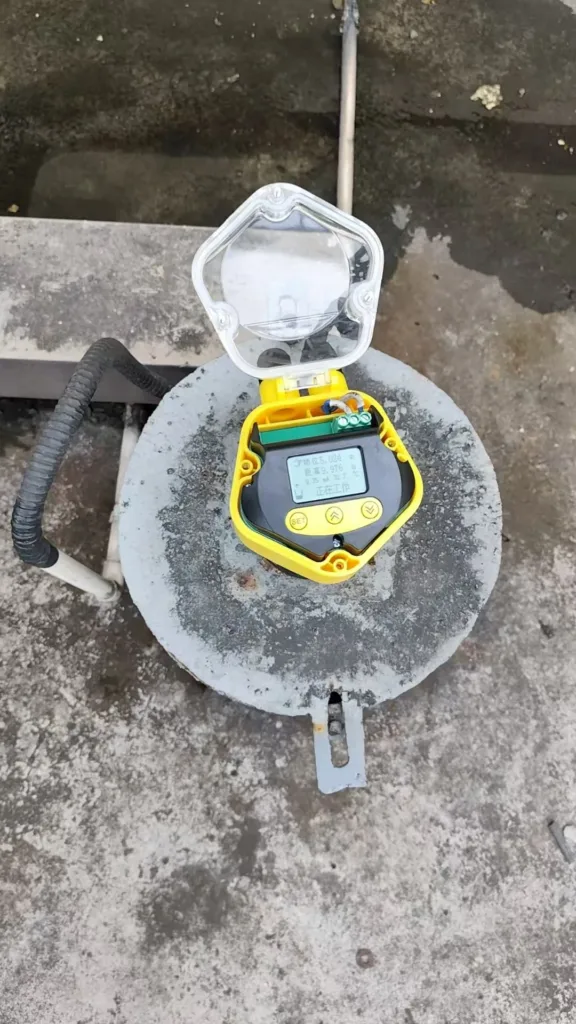
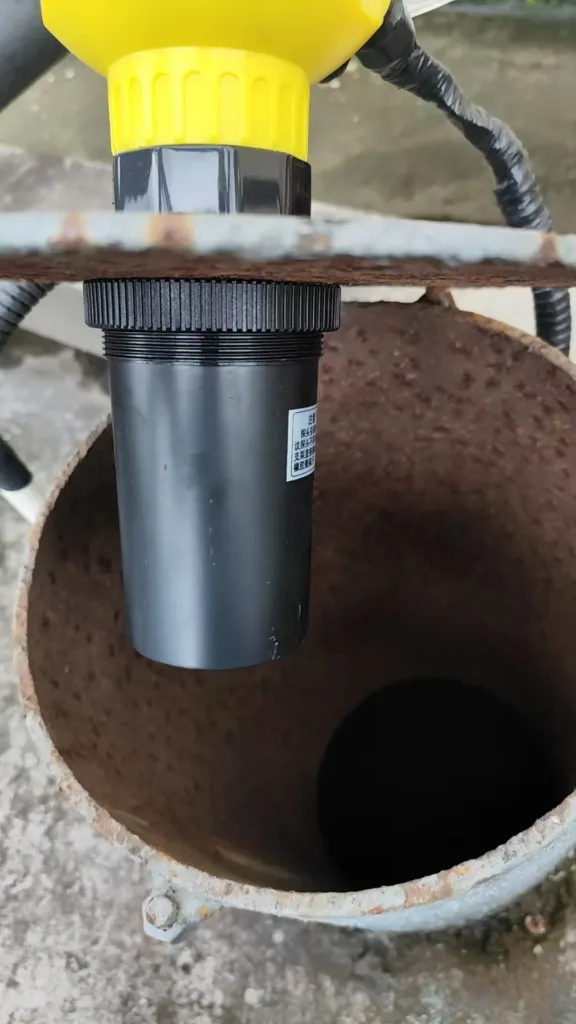
Solution & Installation
For a reliable non-contact installation, the sensor is mounted above the tank, clear of the fill stream and above the highest water level by at least the dead zone, with nothing crossing the ultrasonic beam. The measured distance is referenced to the mounting face, so the tank geometry — empty distance and span — is entered to convert distance into a level reading. The RS485 output carries the value into the customer’s monitoring system.
Results
The tank water level is measured continuously without anything immersed, which removes the fouling and jamming associated with contact devices. Mounting above the tank and setting the empty distance and span correctly is what makes the reading correspond to the real water level.
Related Products
- KUM-A intelligent ultrasonic level sensor
- KUM-B ultrasonic level sensor
- KUS550 ultrasonic water level sensor
- KUS640 integrated ultrasonic level sensor
- Ultrasonic Level Sensor (category)
Frequently Asked Questions
Q: Can an ultrasonic sensor measure water level without touching the water?
A: Yes. Ultrasonic level measurement is non-contact: the sensor is mounted above the surface and measures the echo returning from it. Nothing is immersed, so there is no wetted-material or fouling issue in the water itself.
Q: What can make an ultrasonic level reading unstable?
A: Objects crossing the beam, heavy vapour or condensation on the sensor face, thick foam on the water surface, and a level that rises into the sensor’s dead zone. Checking these four items resolves most unstable-reading complaints.
Q: What is the dead zone and why does it matter?
A: It is the minimum distance beneath the sensor within which the instrument cannot reliably separate the echo from its own transmission. If the water rises into that zone, the reading becomes invalid, so the sensor must be mounted high enough to keep the maximum level clear of it.
Q: Does the sensor need to be calibrated to the tank?
A: Yes. The reference point and the span have to be entered so that the measured distance is converted into the correct level for this specific tank. This is a configuration step, not a hardware change.
Need a similar solution?
Every article in this library is built from a real application. Browse the full collection to see how these instruments perform in the field, or talk to our application engineers about your own installation.


