



Wastewater monitoring solutions in wastewater treatment
The Growing Urgency of Wastewater Management
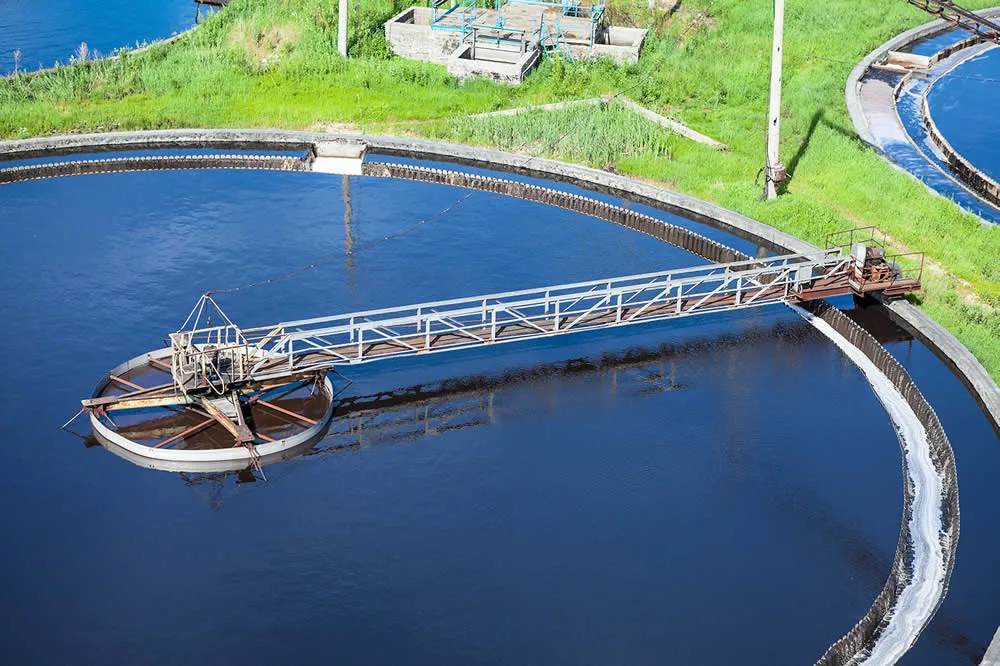
Water scarcity, rapid urbanization, and stricter environmental standards are driving a transformative shift in how we think about wastewater — not as waste, but as a resource. Wastewater treatment is no longer just about compliance; it’s about sustainability, circular water economy, and smart water infrastructure.
Globally, 268 billion m³ of household wastewater was generated in 2022, but only about 155 billion m³ (58%) was safely treated.
That leaves a significant portion (42%) either untreated or treated inadequately.
These gaps are especially alarming when we consider the United Nations Sustainable Development Goal (SDG) 6.3, which calls for halving the proportion of untreated wastewater and significantly increasing its safe reuse.
On the market side, advancements in water treatment technologies are accelerating. According to WABAG’s 2024–2025 annual report, the global water and wastewater treatment equipment market was around US$ 347.9 billion in 2024, and is projected to grow to US$ 623.2 billion by 2032, at a compound annual growth rate (CAGR) of ~7.6%.
These macro trends set the stage for smart monitoring solutions that can deliver real-time insights, help optimize treatment processes, and support water reuse strategies.
Main sources of wastewater

Municipal Wastewater

Industrial Wastewater
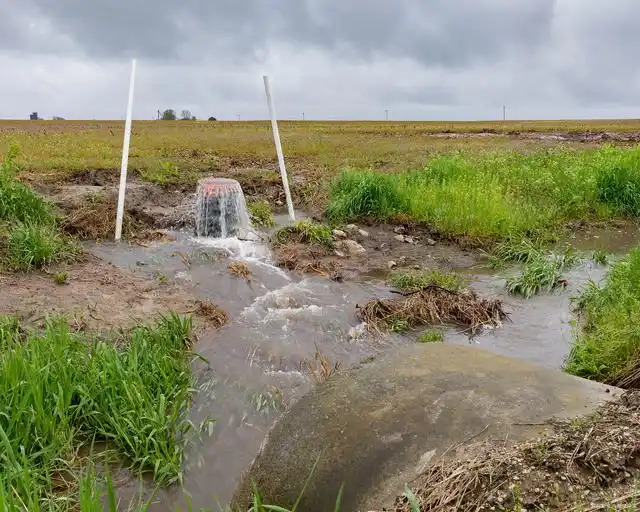
Agricultural Wastewater
Key Challenges in Modern Wastewater Treatment
Despite technological advances, wastewater treatment plants (WWTPs) and industrial facilities face several persistent challenges:
- Operational Efficiency vs. Energy Consumption
Biological treatment (e.g., activated sludge) is energy-intensive, particularly due to aeration. Without precise, real-time feedback, plants may operate inefficiently, consuming more energy than necessary. - Variable Influent Quality
Wastewater influent changes constantly — organic load, suspended solids, pH, and other parameters fluctuate. Without continuous monitoring, sudden load spikes or toxic shocks may compromise treatment performance. - Maintenance and Reliability of Sensors
Traditional sensors often suffer from drift, fouling, or require frequent calibration. In challenging wastewater environments, this leads to downtime, increased maintenance costs, and unreliable data. - Tertiary Treatment & Reuse Standards
As more plants move toward tertiary (advanced) treatment — for reuse or stricter discharge limits — the need for accurate, multi-parameter monitoring (e.g., turbidity/TSS, COD, nutrients) becomes critical. - Regulatory Pressure & Data Transparency
Regulators and stakeholders increasingly demand transparent, verifiable data. Manual sampling and lab analysis are slow and may not reflect real-time conditions. - Scalability & Integration
Many WWTPs are old or not designed for digital retrofit. Integrating a modern monitoring system into legacy infrastructure can be complex.
What you want to know: Wastewater treatment process flow chart
Key Wastewater Monitoring Parameters should be focused
To optimize wastewater treatment and reuse, plants typically monitor a set of core water quality parameters. Below is a table summarizing key parameters, their significance, and typical measurement challenges:
| Parameter | Importance in Wastewater Treatment | Measurement Challenges |
|---|---|---|
| COD (Chemical Oxygen Demand) | Indicates organic load; essential for evaluating the pollution level and treatment efficiency | High dynamic range; interference from turbidity; need for sensitive, reagent-free sensors |
| TSS / Turbidity | Reflects suspended solids, flocs, sludge concentration; critical during sedimentation and effluent discharge | Fouling, color interference, bubble interference |
| Dissolved Oxygen (DO) | Key for biological (aerobic) processes; ensures microbial health and treatment efficacy | Low-oxygen zones, calibration drift, biofouling |
| pH / ORP | pH affects microbial kinetics and chemical dosing; ORP (oxidation-reduction potential) provides insight into redox conditions | Rapid fluctuations, chemical interference, electrode contamination |
| Level / Liquid Height | Monitoring tank and sludge levels helps avoid overflow, control recirculation, and optimize pumping | Harsh environment, foam, variable interfaces, installation complexity |
| Additional (NH₃-N, Oil, Chlorophyll, etc.) | For nutrient removal, advanced reuse, toxic load control | Multi-parameter complexity, cross-sensitivity, maintenance |
Wastewater treatment solutions
China KACISE provides a comprehensive range of high-quality sensors and analyzers tailored for wastewater applications. Below, we highlight key products, their technical features, and how they map to the challenges outlined above.
| Preferred probe | Parameter(s) | Key Features & Advantages |
|---|---|---|
| KWS-100 UV254 COD Sensor | COD (and TOC / SAC) | Reagent-free UV photometric measurement, automatic turbidity compensation, digital RS-485/Modbus. |
| KCD600 Online COD Analyzer | COD | Spectrophotometric dichromate method, wide measurement range up to 40,000 mg/L, 7-inch touch LCD, long-term data storage, automatic calibration. |
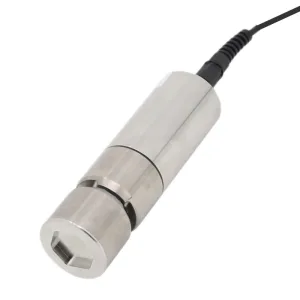
| KWS-910 Online TSS Sensor | TSS / Suspended Solids | Uses 135° back-light infrared principle, fiber-optic structure, automatic cleaning brush, RS-485 output. |
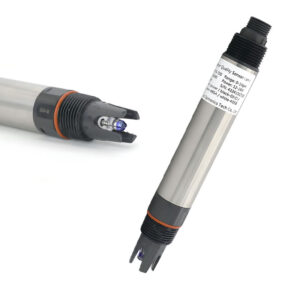
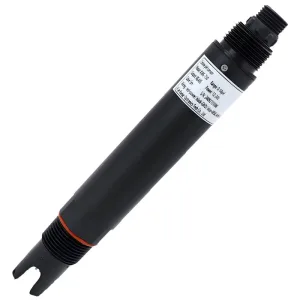
| KWS-850 Multi-Parameter Sensor | DO, COD, pH, ORP, Turbidity, Ammonia, Conductivity | Measures up to 8 parameters; built-in self-cleaning; Modbus/RS-485; compact integrated design. |
| KWS-800 Multi-Parameter Monitoring System | Configurable (pH, DO, turbidity, ORP, etc.) | Connects up to 6 probes, automatic cleaning brush, calibration data stored in each probe, reliable long-term monitoring. |
| KMPW100 Multi-Parameter Controller | Various (plug-and-play with KACISE sensors) | 7″ touch screen, up to 8 analog outputs, RS-485 / Modbus, local storage for 2+ years, relays for control. |
| KLD801 Radar Level Sensor | Liquid Level / Sludge Height | Non-contact FMCW radar measurement, wide range, unaffected by dust or condensation, ideal for harsh wastewater conditions. |
How These Products Overcome Critical Wastewater Monitoring Challenges
- Reagent-free COD sensing (KWS-100) reduces operational cost and avoids chemical handling, making long-term, continuous organic load monitoring feasible.
- Broad-range COD analyzer (KCD600) handles highly polluted streams as well as low-carbon load effluent, making it useful from influent to polishing stages.
- Accurate TSS measurement (KWS-910) with automatic cleaning ensures stable data even in high-fouling environments.
- Multi-parameter integration (KWS-850 & KWS-800) reduces footprint, lowers wiring complexity, and supports more holistic process control.
- Robust data controller (KMPW100) enables seamless integration with SCADA / DCS systems, remote control, and long-term data tracking.
- Non-contact level sensing (KLD801) avoids common mechanical failures, prevents cross-contamination, and is ideal for sludge or water tanks.