







In industrial production and process control, accurately measuring the liquid level is a crucial part. The radar level gauge, as an advanced liquid level measurement device, has been widely applied in numerous fields due to its advantages such as high precision, non-contact measurement, and a wide range of applications. This article will elaborate on the measurement principle, operation method, and related precautions of the radar level gauge to help you better understand and use this device.

Oil Tank Measurement

Asphalt Level Measurement
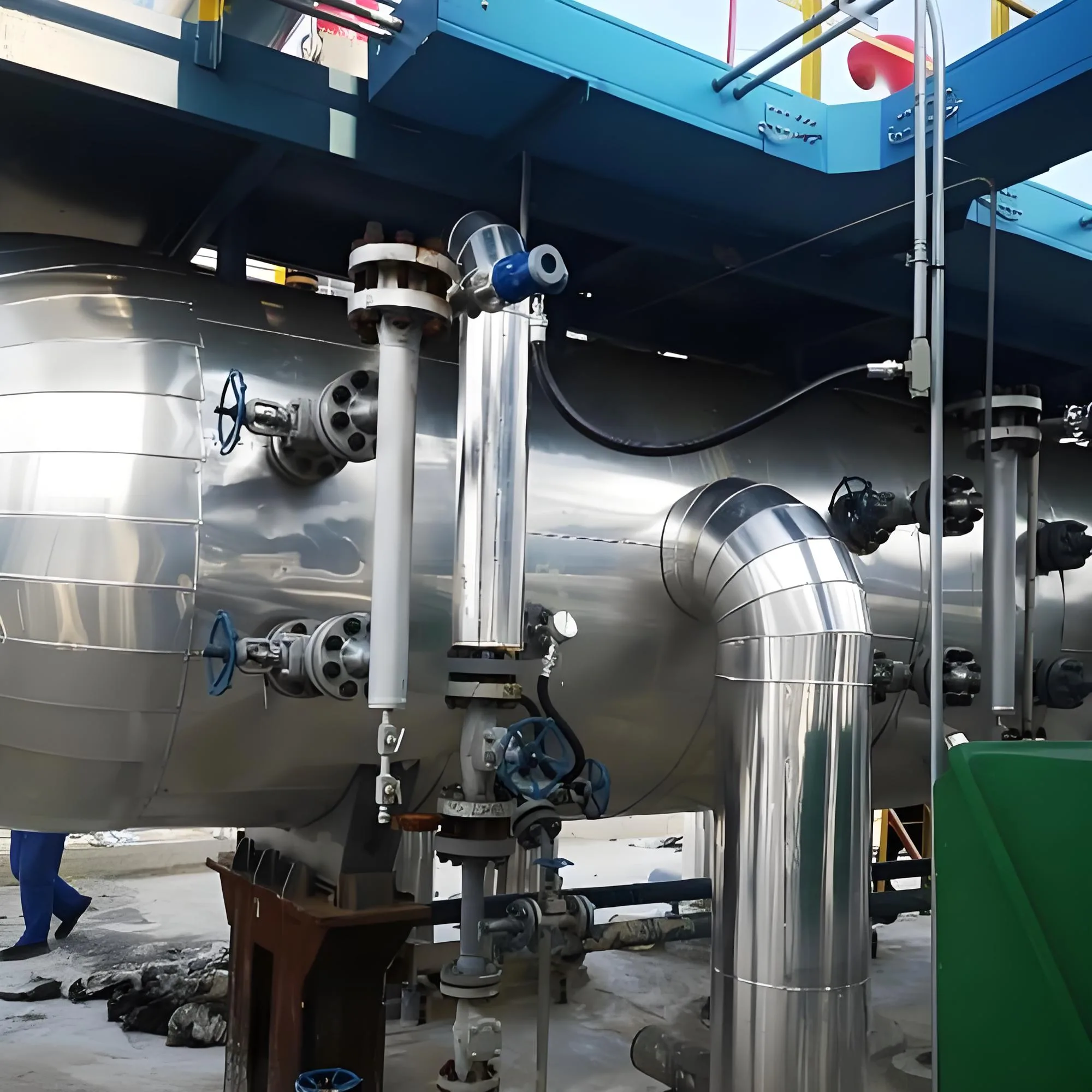
Boiler Water Level Monitoring
Measurement Principle of the Radar Level Gauge
The radar level gauge operates in a transmit-reflect-receive mode. It emits electromagnetic waves towards the surface of the measured liquid through the antenna. After the electromagnetic waves encounter the liquid surface, they are reflected back and received by the antenna. The radar level gauge calculates the distance from the antenna to the liquid surface based on the time difference between the transmission and reception of the electromagnetic waves, and then determines the liquid level height. The calculation formula is:
D=( C x T ) / 2
Where D is the dista nce from the antenna to the liquid surface, C is the propagation speed of electromagnetic waves in the air (approximately 3×10⁸ m/s), and T is the time difference between the transmission and reception of electromagnetic waves.
Installation Key Points of the Radar Level Gauge
- Installation Location Selection: It should be installed at or near the center of the tank, avoiding installation near the liquid inlet, outlet, agitator, etc., to prevent the influence of liquid fluctuations and interference on the measurement results.
- Angle between the Antenna and the Liquid Surface: The antenna should be installed perpendicular to the liquid surface to ensure that the electromagnetic waves can be transmitted and received vertically, improving the measurement accuracy.
- Installation Height: According to the height of the tank and the measurement range, reasonably determine the installation height of the radar level gauge to ensure that the antenna can cover the entire measurement area.
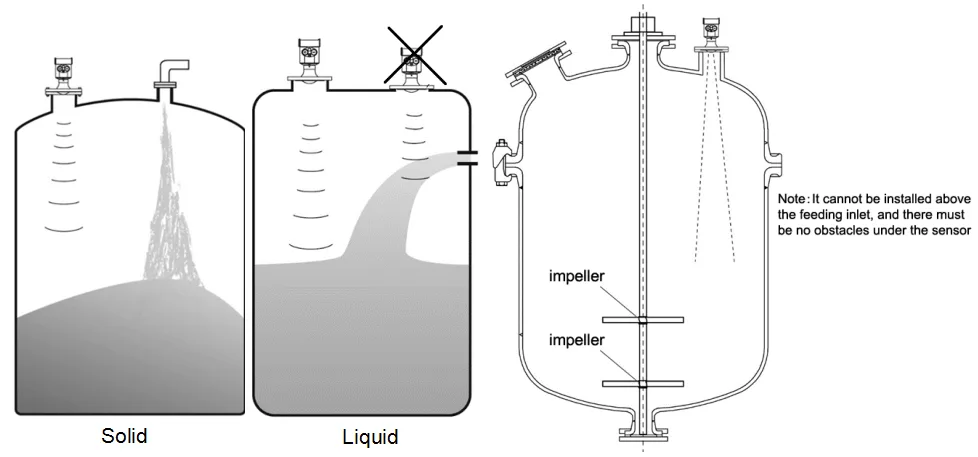
Here is a simple table of installation precautions:
| Precautions | Specific Requirements |
|---|---|
| Installation Location | At or near the center of the tank, away from interference sources |
| Antenna Angle | Perpendicular to the liquid surface |
| Installation Height | Determined according to the tank height and measurement range |
Under extremely complex working conditions, the instrument can work normally if there is no obstacle in the area with a radius of 20cm centered on the installation point.

Operation Steps of the Radar Level Gauge
- Parameter Setting: After installation, parameters of the radar level gauge need to be set, including the measurement range, unit, output signal, etc. Set the parameters through the operation panel or the supporting software to ensure the correct setting.
- Debugging and Calibration: Conduct debugging and calibration to check whether the radar level gauge works properly. Calibration can be carried out by simulating the liquid level change or actual measurement to ensure the accuracy and reliability of the measurement results.
- Daily Monitoring: During normal operation, regularly monitor the radar level gauge, check whether the measurement data is normal, and deal with any abnormalities in a timely manner.


