







Why mud pit level monitoring matters
Oil field mud pit level monitoring is a continuous job. Pits collect drilling fluid, cuttings and produced water, and the level has to be known at all times: a pit that overflows becomes a spill, and one that runs dry can damage pumps.
Manual dipstick readings put people at the pit edge and capture only a moment in time. Float switches foul in sticky, solids-laden mud and need frequent cleaning. Neither gives a trend you can act on.
Why ultrasonic level measurement suits a mud pit
An ultrasonic sensor never touches the mud, so there is nothing to foul:
- Non-contact measurement means no cleaning cycle and no drift from coating.
- It mounts on a bracket above the pit, with no tank penetration.
- At pit depths under 8 m, it costs far less than 80 GHz radar.
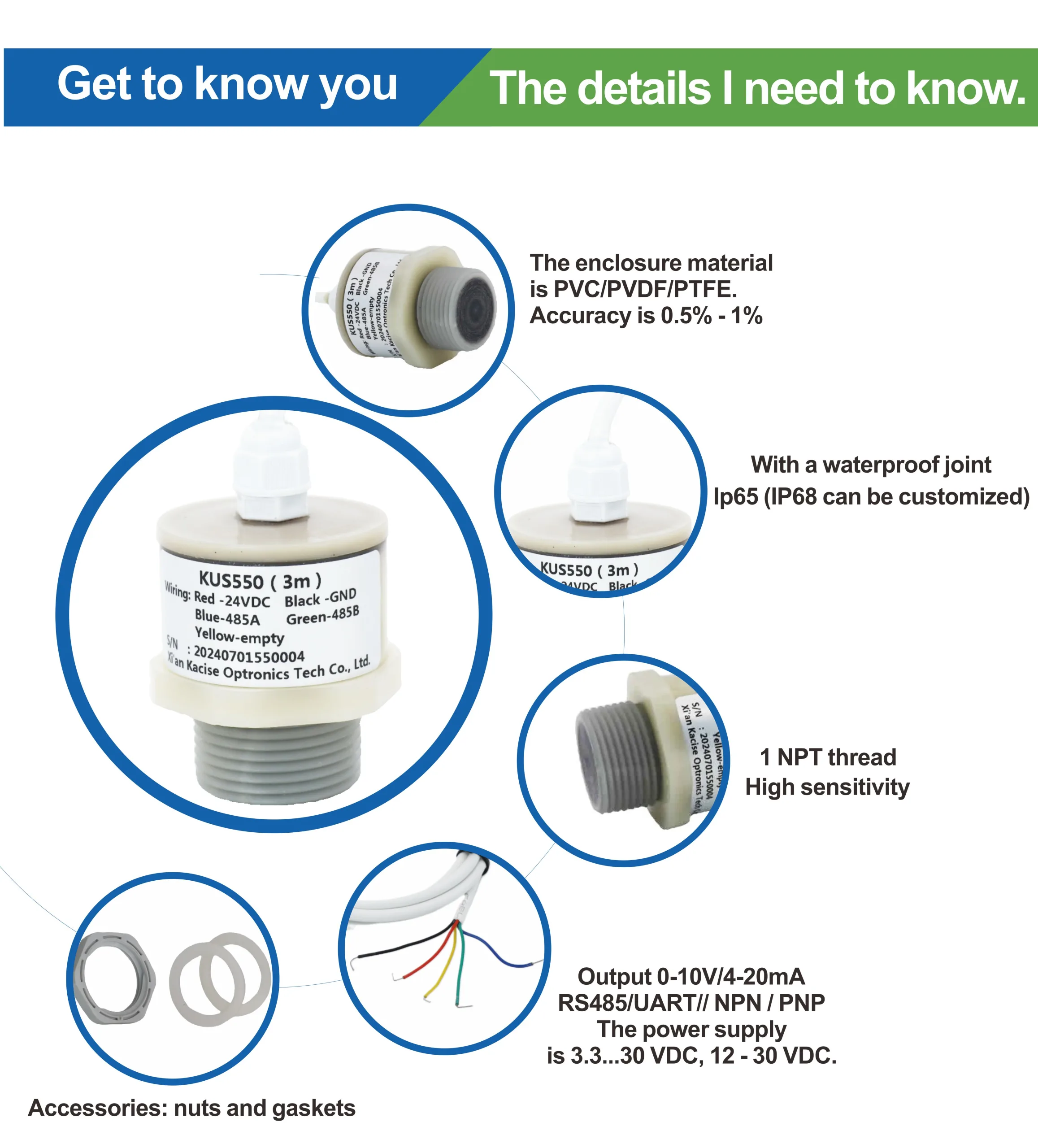
The KUS550 ultrasonic level sensor used here covers 0.3–8 m with ±0.5% FS accuracy, is rated IP68, and offers 4–20 mA, RS485 Modbus and wireless outputs. It works from –20 °C to +60 °C.
Installation on the mud pit
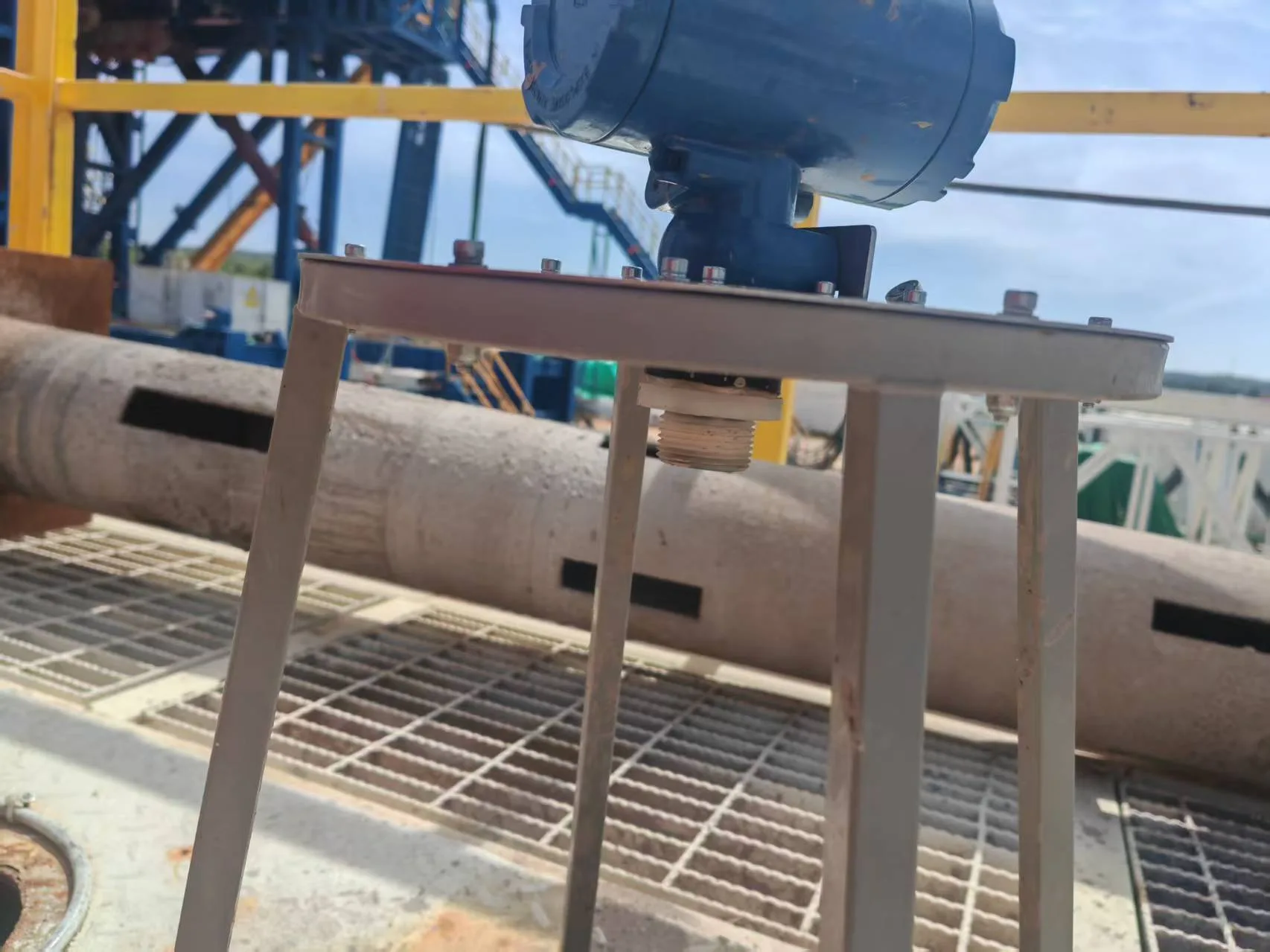
The sensor is bracket-mounted at the pit rim and aimed vertically at the surface. Its height keeps the highest expected mud level outside the blanking distance, so readings stay valid when the pit is full.
A 4G DTU on the RS485 output sends readings to a cloud dashboard, so the control room sees the trend without new cabling. Sites without cellular coverage can use LoRaWAN or a local gateway instead.
Results: continuous level data, fewer manual dips
Continuous readings removed manual dipping from the daily routine. The team set high-level alarms ahead of overflow and used the trend to schedule pit emptying around drilling rather than reacting to a full pit.

Two limits are worth planning for. Rain falling directly on the mud adds ±2–3 cm of noise; the built-in averaging filter removes most of it, but uncovered pits read noisier in storms. Persistent foam absorbs ultrasound, so if foam is normal at your site, use guided-wave radar instead. Both behaviours follow from how ultrasonic level measurement works.
Practical settings for a similar pit:
- Use ultrasonic for pits under 8 m; radar rarely pays back at that range.
- Check cellular signal at the pit before committing to a 4G DTU.
- Set the high-level alarm 15–20 cm below the rim.
Frequently Asked Questions
Q: Why use an ultrasonic sensor instead of a pressure transmitter in a mud pit?
A: The sensor does not touch the mud. Viscous mud, cuttings, and settled solids coat a diaphragm and cause drift, while an ultrasonic head only needs a clear path to the surface.
Q: How is the KUS550 mounted at the pit top?
A: It is bracket-mounted above the pit, aimed vertically at the surface, with the blanking distance respected so the highest expected level stays outside the dead zone.
Q: Does foam on the mud affect the reading?
A: Yes. Thick foam absorbs and scatters ultrasound. If foam is persistent, a guided-wave radar or a radar level sensor is the safer choice.
Q: What output options are available?
A: The KUS550 is available with analogue and serial outputs. The version used here transmitted to a wireless module for the control room.
Need a similar solution?
Every article in this library is built from a real application. Browse the full collection to see how these instruments perform in the field, or talk to our application engineers about your own installation.


