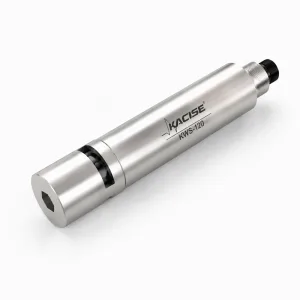


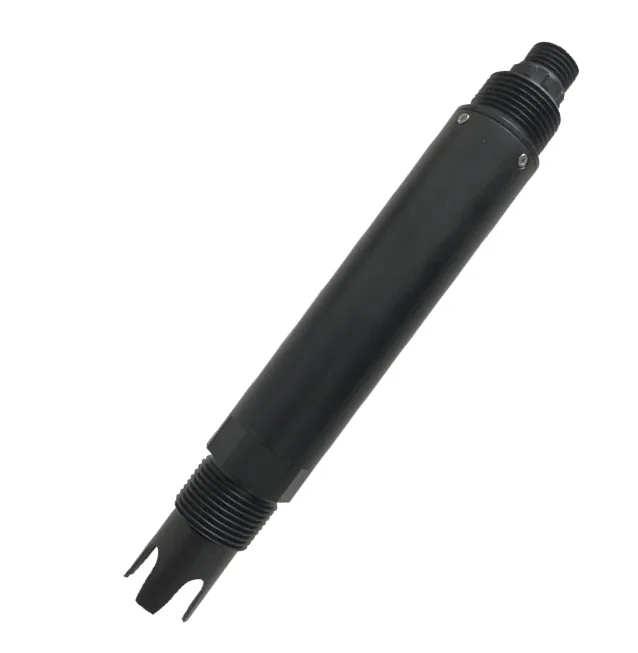
KIS-100 Online Calcium Ion Sensor
Category Water Quality Sensor
Tag KIS-100 Online Calcium Ion Sensor
Introduction
KIS-100 integrated online calcium ion sensor is made of calcium ion selective electrode based on PVC membrane, which is used to test the calcium ion content in water, with temperature compensation, ensuring that the test is fast, simple, accurate and economical. This user manual details the technical parameters, use and maintenance, and communication protocols of the calcium ion sensor.
Features
- Signal output: RS-485 bus, Modbus/RTU protocol, convenient for connection to third-party devices such as PLC, DCS, industrial control computers, general controllers, paperless recording instruments or touch screens.
- Patented calcium ion electrode, the internal reference solution seeps out of the microporous salt bridge extremely slowly at a pressure of at least 100KPa (1Bar). Such a reference system is very stable, and the electrode life is longer than that of ordinary industrial electrodes.
- Easy to install: 3/4NPT pipe thread, easy to install in submerged or in pipes and tanks.
- IP68 protection grade.
Dimension

| Model | KIS-100 | |
|---|---|---|
| Range and resolution | 0~100.00mg/L | 0.01mg/L |
| 0~1000.0mg/L | 0.1mg/L | |
| Accuracy | <60s | |
| Response time (T90) | 0.09(0-100mg/L) | |
| Minimum detection limit | 0.9(0-1000mg/L) | |
| Storage temperature | -5~40℃ | |
| Working conditions | 0~40℃,<0.1MPa | |
| pH range of medium | 4~10pH | |
| Temperature compensation | Automatic temperature compensation (Pt1000) | |
| Power supply | 12~24VDC | |
| Signal output | RS-485 (Modbus/RTU), 4-20mA (optional) | |
| Casing material | POM and 316L stainless steel | |
| Mounting method | 3/4NPT pipe thread, immersion installation | |
| Cable length | 5 meters, other lengths can be customized | |
| Calibration method | Two-point calibration | |
| Power consumption | 0.2W@12V | |
| Protection level | IP68 | |
KIS-100 Online Calcium Ion Sensor Tutorial | Introduction + Wiring + Read Data
Related Articles View
Essential Guide to pH Probes: Function, Components & Best Practices
How pH Sensors Work: 5 Powerful Reasons They’re Essential
ORP Sensors: Essential, Crucial Benefits, Key Applications, and How They Work
The best way to select the ideal dissolved oxygen sensor
Turbidity Sensor Guide: Benefits, Types, and Applications Explained
How pH Sensors Work: Principle, Calibration & Buying Guide