


1. Project Background
A wastewater treatment plant required continuous monitoring of discharge flow in an open concrete channel for operational management and reporting purposes.
The channel operates under non-full flow conditions with fluctuating water levels, making conventional flow meters unsuitable.
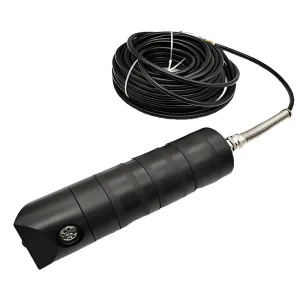
To meet the requirements for durability, stability, and long-term operation, the KDF1500 Series ultrasonic Doppler flow meter was selected for this project.
2. Measurement Challenges
Key challenges at the site included:
- Open channel, non-full flow conditions
- Significant water level and flow fluctuations
- Presence of suspended solids in the water
- Large flow range
- Limited installation space in concrete structures
3. Solution
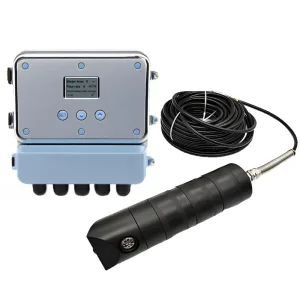
The project implemented the KDF1500 Series ultrasonic Doppler flow meter, configured to suit the on-site conditions.
3.1 System Configuration
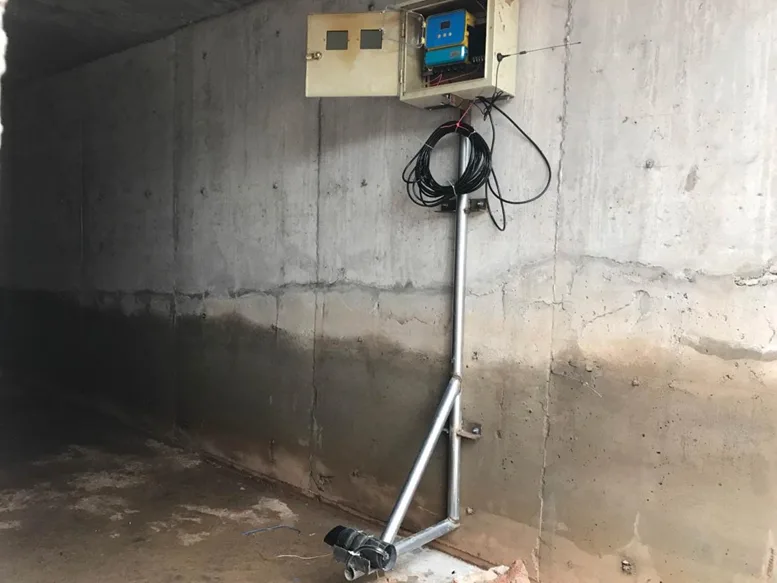
- KDF1500 Series wall-mounted main unit
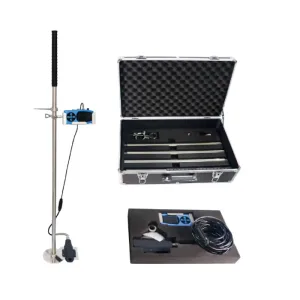
- Ultrasonic Doppler sensor mounted via stainless steel bracket
- Local display for on-site flow indication
- Single output signal integrated into the plant monitoring system
- Rugged mounting structure for long-term stability
3.2 Installation Method
The main unit was wall-mounted above the channel, while the sensor was installed in the flow area using a metal support structure.
This setup ensured stable measurements under varying water levels without modifying the original channel structure.

3.3 Measurement
The system continuously measures flow velocity and calculates flow rate in the open channel.
Real-time data is displayed locally and transmitted to the plant’s control system for monitoring and analysis.
4. Project Performance
| Item | Actual Performance |
| Operational Stability | Measurement continuity > 99%, no long-term downtime recorded |
| Adaptability to Water Level Changes | Measurement error ≤ ±3% within water level range of 0.2–2.5 m |
| Installation Reliability | Sensors firmly fixed, no displacement during rainy or windy seasons |
| Maintenance Effort | Monthly maintenance approximately 0.5–1 hour per unit |
| Manual Inspection Frequency | Reduced from daily inspections to 1–2 times per week |
5. Conclusion
The KDF1500 Series ultrasonic Doppler flow meter provides a reliable solution for open channel and large-flow monitoring applications.
Its robust design and flexible installation make it suitable for wastewater treatment plants, ecological flow monitoring, and similar industrial environments.
For more technical details, wiring diagrams, or model selection guidance, please click here to learn more or contact our technical team.