







1. Project Background
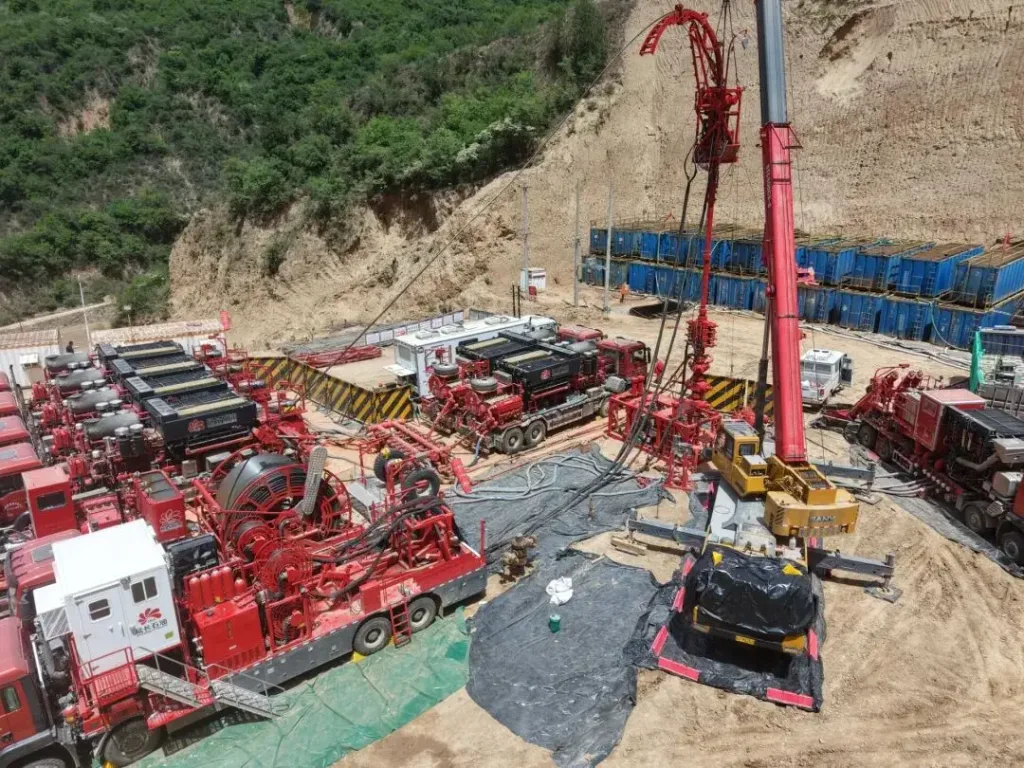
An oilfield services provider operates hydraulic fracturing and cementing vehicles that handle ultra-high pressure fluid delivery processes. Accurate real-time pressure measurement of high-pressure fluid circuits is critical for safety and operational efficiency. Prior solutions using traditional pressure gauges showed mechanical fatigue and corrosion issues under harsh field conditions.
To improve reliability, the operator deployed the KPS210 Hammer Union Pressure Sensor for real-time monitoring of key pressure points on the equipment.
2. Measurement Challenges
This application had several technical challenges:
- Ultra-high pressure range: up to 160 MPa required robust sensor design.
- Harsh drilling environment: vibration, dust, and temperature variation.
- Corrosive fluids: contact materials must resist corrosion.
- Explosion risk zones: sensor needed intrinsic safety certification.
3. Solution
The solution integrated the KPS210 hammer union pressure sensor directly into the high-pressure lines of fracturing and cementing trucks. The sensor’s sturdy construction and explosion-proof design ensured precise, continuous pressure monitoring in difficult conditions.

3.1 Equipment Configuration
- KPS210 hammer union pressure sensor (mounted directly on pressure port)
- Stainless steel high-pressure tubing to integrate with fluid line
- Local indicator or control system receiving 4–20 mA output
- Protective vibration dampers
3.2 Key Technical Specifications
| Parameter | Specification |
| Measuring Range | 0–30 … 160 MPa |
| Output Signal | 4–20 mA (two-wire) |
| Accuracy | ±1 %FS (zero + non-linearity) |
| Operating Temp | -30 °C to 70 °C |
| Protection | IP65 |
| Explosion Proof | Ex ib IIB T6 Gb |
| Housing | Stainless steel 304 |
| Sensor Diaphragm | 17-4PH stainless steel |
3.3 Implementation Process
Installation
The KPS210 sensor was connected to the high-pressure fluid line using standard hammer union fittings. Care was taken to ensure straight sections of pipe upstream to minimize turbulence effects on measurement.
Configuration
The sensor was powered with 12–28 VDC and calibrated with the control system to ensure accurate scaling of 4–20 mA output to pressure values.
Monitoring & Control
Real-time pressure data were used to inform operators of fluid pressure status and provide alarm signals if pressure exceeded preset safety thresholds.
4. Project Results
| Performance Metric | Result |
| Measurement Stability | High under vibration and temperature changes |
| Accuracy | Consistent with reference gauge |
| Corrosion Resistance | Stable after long term field use |
| Explosion Safety | Compliant with Zone 1/2 requirements |
| Maintenance | Reduced compared to previous mechanical gauges |
The robust design and accurate output improved operational safety and reduced sensor failures in the field.
5. Conclusion
The KPS210 hammer union pressure sensor delivered reliable high-pressure monitoring performance on hydraulic fracturing and cementing equipment, providing operators with real-time insights into fluid pressure and enabling safer, more efficient processes.
For more technical details, wiring diagrams, or model selection guidance, please click here to learn more or contact our technical team.


